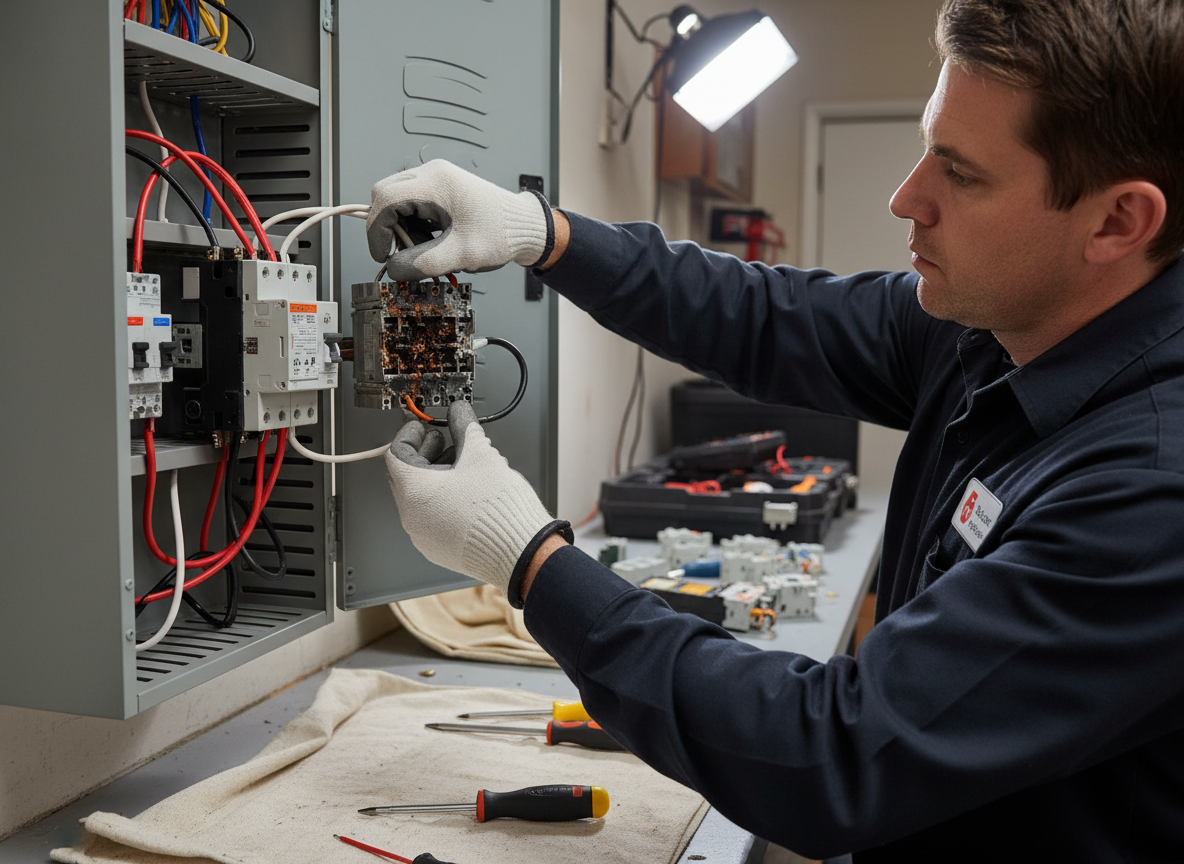
Stuart's housing ranges from 1950s-1970s builds in the Downtown Stuart Historic District to newer waterfront properties near Stuart Beach and Jensen Beach. Many older panels contain outdated breakers prone to failure during peak summer loads when air conditioning runs continuously in the humid subtropical climate. Replacement often requires verifying compatibility with existing bus bars that have corroded from salt air and moisture infiltration common along the Riverwalk and coastal zones.
In Martin County, frequent afternoon thunderstorms and occasional tropical systems create sudden voltage spikes that stress breakers in homes throughout Port Salerno and Hobe Sound. Technicians check for signs of arcing or overheating on aluminum wiring common in 1960s-1980s construction before installing new breakers. Proper torque on connections and use of manufacturer-specified breakers prevent nuisance trips that homeowners in Jensen Beach and Port Saint Lucie often experience after humidity spikes.
Code updates in Florida require arc-fault protection in many circuits during replacement, especially in bedrooms and living areas of older Stuart properties. Panels located in garages or utility rooms near the Intracoastal face higher corrosion risk, demanding inspection of the enclosure and grounding before work begins. Homeowners should expect a full panel assessment rather than isolated breaker swaps to avoid repeated service calls during heavy summer use.
Technician insight
In Stuart, the thing that catches most people out with Circuit Breaker Replacement is hidden corrosion on the bus bars inside panels located in garages or utility rooms near the water in Port Salerno and Stuart Beach homes. The constant humidity and occasional salt air during summer storms accelerates oxidation on older Federal Pacific or Zinsco panels common in the Historic District, so a simple breaker swap often turns into a deeper cleaning job or partial panel work.
Overloaded Panel in Jensen Beach
A homeowner in Jensen Beach reported repeated tripping on the air-conditioning circuit during afternoon storms. Inspection revealed a corroded 30-amp double-pole breaker and oxidized bus bar connections from years of humidity exposure. The breaker was replaced along with cleaning and torque verification on adjacent circuits, restoring stable operation through the remaining hot season.
Circuit Breaker Replacement Services We Offer
✓Residential Breaker Replacement
Swap faulty or outdated breakers in single-family homes across Downtown Stuart and Jensen Beach to restore reliable power without panel replacement.
✓AFCI Breaker Installation
Add arc-fault circuit interrupter breakers required by current codes in older Martin County residences to reduce fire risk from wiring faults.
✓GFCI Breaker Upgrade
Replace standard breakers with ground-fault models in kitchens, bathrooms, and outdoor areas near Stuart Beach where moisture increases shock hazards.
✓Main Breaker Replacement
Service main breakers in 100-200 amp panels common to 1970s homes in Port Salerno and Hobe Sound when they overheat or fail to reset.
✓Double-Pole Breaker Service
Install or replace double-pole breakers for high-load appliances like water heaters and dryers in humid Stuart homes where corrosion accelerates wear.
Circuit Breaker Replacement Cost in Stuart, FL
| Service | Typical Range | What Affects It |
|---|---|---|
| Single-Pole Breaker Replacement | $150–$300 | Higher in older panels with corrosion common in coastal Stuart neighborhoods. |
| Double-Pole Breaker Replacement | $200–$450 | Varies with amperage and access in humid garages or utility rooms. |
| AFCI or GFCI Breaker Addition | $250–$500 | Includes testing; price rises with multiple circuits in historic district homes. |
| Main Breaker Service | $350–$650 | Depends on panel age and whether bus bar cleaning is required after summer storms. |
Ranges are typical for Stuart, FL and confirmed with an exact written quote before any work starts.
How it works
- 1
Initial Assessment
Technician inspects the panel location, wiring type, and existing breakers while noting any corrosion from local humidity or salt air exposure.
- 2
Load Calculation
Verify circuit loads against current Florida codes and the home's actual usage patterns in hot, humid summers before selecting replacement breakers.
- 3
Breaker Removal and Installation
Safely isolate power, remove old breakers, clean bus bars if needed, and install new breakers with proper torque specifications.
- 4
Testing and Documentation
Restore power, test each circuit under load, and provide the homeowner with a written summary of work performed.
Pricing
Upfront quotes given during scheduled hours with pricing based on panel condition and breaker type needed.